The Golden Age
The Abbasid Caliphate (750–1258 CE) marked a pivotal era in Islamic art, shifting the cultural center from Damascus to Baghdad and later Samarra. This period saw the synthesis of Persian, Mesopotamian, and Hellenistic influences into a distinct and coherent Islamic style.
From the precise geometry of Kufic calligraphy to the invention of lusterware ceramics, Abbasid artisans set standards of beauty that would influence the world for centuries.
Evolution of Script
Kufic script, with its angular precision and geometric harmony, became the dominant style for Qur'anic manuscripts. The emphasis on proportion and legibility transformed writing into a high art form.
The Art of Illustration
Later Abbasid manuscripts, such as the Maqamat of al-Hariri, featured vibrant illustrations depicting daily life. These images provide a rare and intimate glimpse into the social fabric of the medieval Islamic world.
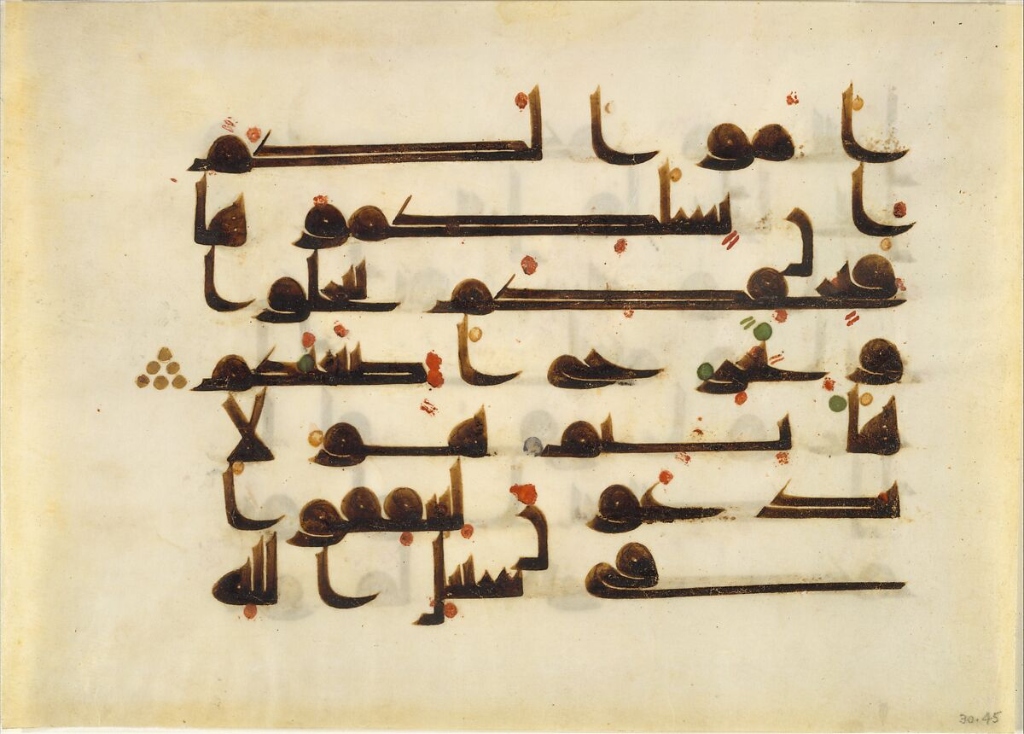 9th Century Qur'an Folio (Kufic)
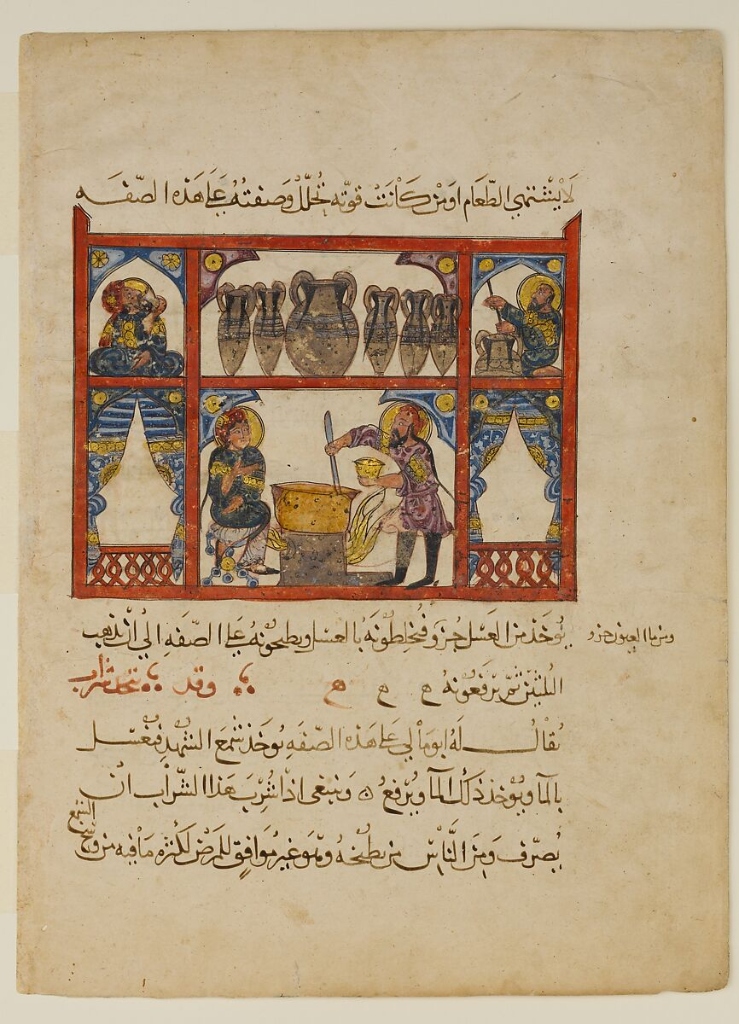 Scene from the Maqamat of al-Hariri
Artistic Innovations
Lustreware
A revolutionary technique using metallic pigments to create a shimmering, gold-like finish on ceramics. This innovation spread from Iraq to Spain and eventually captivated Renaissance Italy.
The Beveled Style
Originating in Samarra, this abstract style of carving wood and stucco features slanted cuts and geometric repetition, marking a move towards pure abstraction in surface decoration.